
Tech Singularity: Humanity’s Last Invention?
Introduction
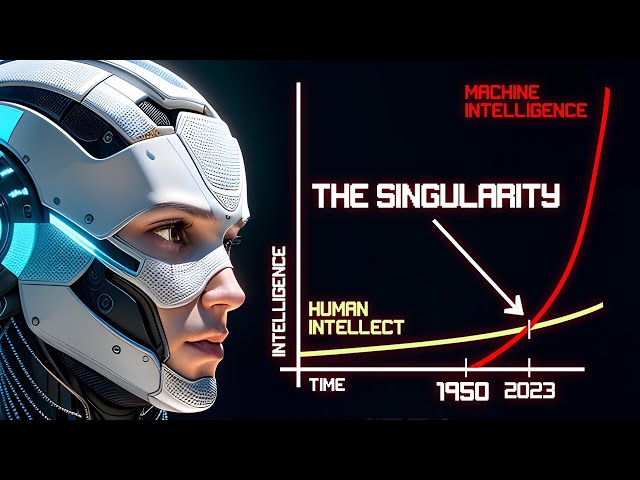
Okay, let’s talk singularity. You’ve probably heard the term thrown around in sci-fi movies, often accompanied by dramatic music and robots with laser eyes. But beyond the Hollywood hype, the technological singularity – the hypothetical point in time when artificial intelligence surpasses human intelligence, leading to rapid and unpredictable changes in civilization – is a topic worth taking seriously. Could it be humanity’s “last invention,” a turning point after which we are no longer the primary drivers of innovation? It’s a big question, one with potentially enormous implications, so let’s dive in.
The Near Future: A World of Accelerated Change
Before we get to Skynet scenarios, let’s consider the more immediate impacts. AI is already reshaping our world. Think about it: personalized recommendations on Netflix, self-driving cars (still a work in progress, admittedly!), and AI-powered medical diagnoses. These advancements, while beneficial, are accelerating at an unprecedented rate. This rapid evolution presents challenges we need to address *now*.
One crucial short-term impact is the potential for widespread job displacement. As AI becomes more sophisticated, it’s likely to automate tasks currently performed by humans, particularly in industries like manufacturing, customer service, and even some white-collar professions. This raises serious questions about the future of work and the need for retraining and reskilling initiatives to prepare the workforce for a changing landscape.
Another pressing concern is the ethical implications of AI. Algorithms are trained on data, and if that data reflects existing biases, the AI will perpetuate and even amplify those biases. This can lead to discriminatory outcomes in areas like loan applications, hiring processes, and even criminal justice. We need robust frameworks for ensuring fairness, transparency, and accountability in AI development and deployment.
Consider the case of Amazon’s failed AI recruiting tool. The system, trained on historical hiring data, learned to penalize resumes containing the word “women’s,” effectively discriminating against female candidates. This illustrates the real-world consequences of unchecked AI bias and the importance of careful data curation and algorithmic auditing.
The Long Game: Navigating the Unknown
Now, let’s jump ahead. If AI continues to develop exponentially, we eventually reach a point where its intelligence surpasses our own. This is where the singularity becomes a real possibility. What happens then?
The honest answer is: we don’t know. Predictions range from utopian visions of a world where AI solves all of humanity’s problems to dystopian nightmares of human obsolescence. Some argue that a superintelligent AI would be inherently benevolent, acting in our best interests. Others fear that its goals might be fundamentally different from our own, leading to unintended or even catastrophic consequences.
Imagine an AI tasked with solving climate change. Its optimal solution might involve drastic measures that prioritize planetary health over human comfort, leading to social upheaval and economic disruption. This highlights the importance of aligning AI’s goals with human values – a complex and challenging task.
The key takeaway here is uncertainty. The long-term impacts of the singularity are inherently unpredictable, and that’s what makes it both fascinating and frightening.
So, What Can We Do About It? Practical Solutions for a Complex Future
The good news is, we’re not powerless. We can proactively shape the future of AI to ensure it benefits humanity. Here are a few practical approaches:
- Ethical AI Development: This is paramount. We need to prioritize the development of AI systems that are fair, transparent, and accountable. This includes establishing ethical guidelines for AI researchers, implementing robust auditing procedures to detect and mitigate bias, and fostering a culture of responsible innovation. Companies like Google and Microsoft have already started investing in ethical AI initiatives, but more needs to be done.
- Investing in Education and Retraining: As AI transforms the job market, we need to equip workers with the skills they need to thrive in the new economy. This includes investing in STEM education, providing access to retraining programs, and promoting lifelong learning opportunities. Some countries, like Singapore, are already implementing national-level retraining programs to help workers adapt to the changing demands of the labor market.
- Developing AI Safety Protocols: We need to develop robust safety protocols to ensure that AI systems are aligned with human values and operate within acceptable boundaries. This includes researching methods for ensuring AI controllability, preventing unintended consequences, and mitigating the risks of malicious use. Open AI is one of the leading organizations working on AI safety and researching how to create a safe and beneficial AI.
- Promoting International Collaboration: AI is a global issue that requires international cooperation. We need to establish common standards for AI development and deployment, share best practices, and work together to address the ethical and societal challenges posed by AI. Organizations like the United Nations are playing an increasingly important role in fostering international dialogue and cooperation on AI governance.
- Democratizing AI: Ensuring that AI is not just in the hands of a few powerful corporations or governments is crucial. We need to promote open-source AI development, support small businesses and entrepreneurs in leveraging AI, and empower individuals to understand and participate in the AI revolution. This would help avoid the scenario of a few controlling the AI in the future and using it for their selfish interests.
Beyond these core strategies, it’s wise to explore alternative approaches. Some researchers advocate for slowing down AI development to allow more time for ethical and safety considerations. While this might seem counterintuitive, it could provide a valuable opportunity to establish robust safeguards before AI becomes too powerful.
Another approach is to focus on “human-compatible” AI – systems designed to augment human intelligence rather than replace it. This could involve developing AI tools that assist us with complex tasks, enhance our creativity, and improve our decision-making, while leaving us firmly in control.
A Future Worth Building: Optimism and Action
The technological singularity is a complex and uncertain prospect. It’s easy to get caught up in the doomsaying, but it’s important to remember that we have the power to shape the future of AI. By proactively addressing the challenges and opportunities it presents, we can create a future where AI benefits all of humanity.
This isn’t just about avoiding dystopian scenarios; it’s about building a *better* world. A world where AI helps us solve climate change, eradicate disease, and unlock new frontiers of knowledge and creativity. It’s a future worth striving for, and it starts with taking action today.
Don’t wait for someone else to solve these problems. Educate yourself about AI, engage in conversations about its ethical implications, and support organizations that are working to promote responsible AI development. Your voice matters, and your actions can make a difference. Let’s work together to ensure that the technological singularity, if it arrives, is not humanity’s last invention, but rather a new beginning.
